So Doing, Commit All That Occurred to History
Can story games become memorials?

It’s been a minute since Story Games existed, but I’m back. Happy New Year: I’ve been making plans. As Jeanne Thornton wrote on BlueSky in December:
Now that the “brackish slice of inter-holiday time” has passed, I’m uncoiling the spring. This month, my story game Assemblage is releasing, I’m prepping my Columbia Interactive Memoir class, and looking forward to a party celebrating Assemblage on January 31.
World-Building and World-Breaking
Assemblage is a card-based, GM-less story game of “world-building and world-breaking” in which players embody entire species, tossed together in a precarious ecology. The game culminates in an environmental disaster during which the players choose one, and only one, species that will go extinct.
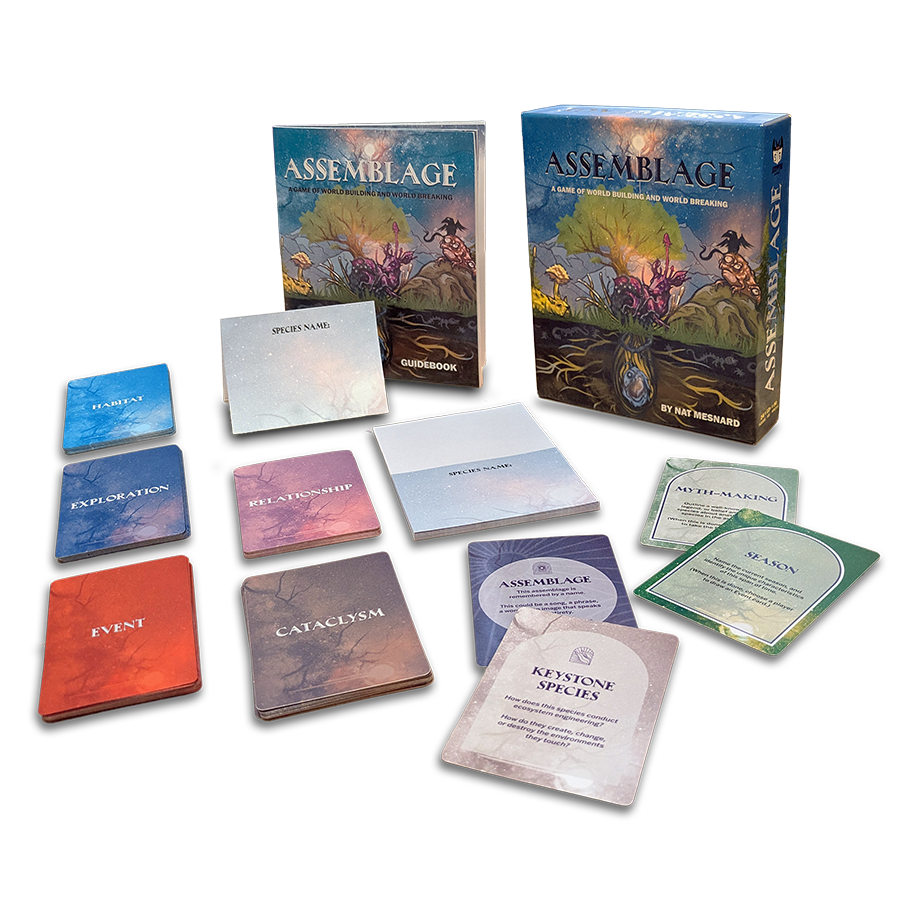
Assemblage is available to play for free online, but if you want to touch the gorgeous linen finish on those cards, the physical version is available for purchase on the Scryptid Games website and at Indie Press Revolution.
Events and media hits about Assemblage have also begun unfolding—including this podcast interview I did with Nick Perron of Tabletopped…
…and a piece on Edge Effects called Role-Playing Queer Assemblages Amidst Capitalist Ruins that recaps Assemblage’s design, delving into personal reflections on power and negotiation in GM-less TTRPGs. Quoting myself below:
Forced by the game rules to make [a] challenging decision, I sensed my players seeking out data and histories from beyond their imaginary world. They stepped outside of the story, facing instead the people who had been writing it. They asked themselves, “Who among us can take responsibility for this moment of narrative annihilation?” The consensus was abundantly clear: the person who would have been the game’s leader, its GM, under a different ruleset.
My season of designing and discussing Assemblage has been beautiful. I’ve been teaching less and creating more, enjoying how accepted conference talks (NarraScope, QGCon) necessitate extended time spent among my best nerdy friends.
In a national season of fear, threat, and anguish, I have also considered ways my life can better reflect the play-container Assemblage creates: collective mourning, bonding, resilience. In my conference presentations last year, I kept quoting Anna Tsing in The Mushroom at the End of the World, who writes:
We are stuck with the problem of living despite economic and ecological ruination. Neither tales of progress nor of ruin tell us how to think about collaborative survival.
This Assemblage is Remembered by a Name
Amid contemplating future survival, I also find myself excavating the past. This spring, I’m teaching Interactive Memoir at Columbia again, and looking for new ways to translate literary memory into story games.
I recently discovered Transit Books’ Undelivered Lectures series—to my immense delight—and I’ll be teaching this semester with Lauren Markham’s Immemorial. A digestible work of narrative journalism, Immemorial investigates a particular form of grief: aching for what is now, as we speak, in the process of being lost.
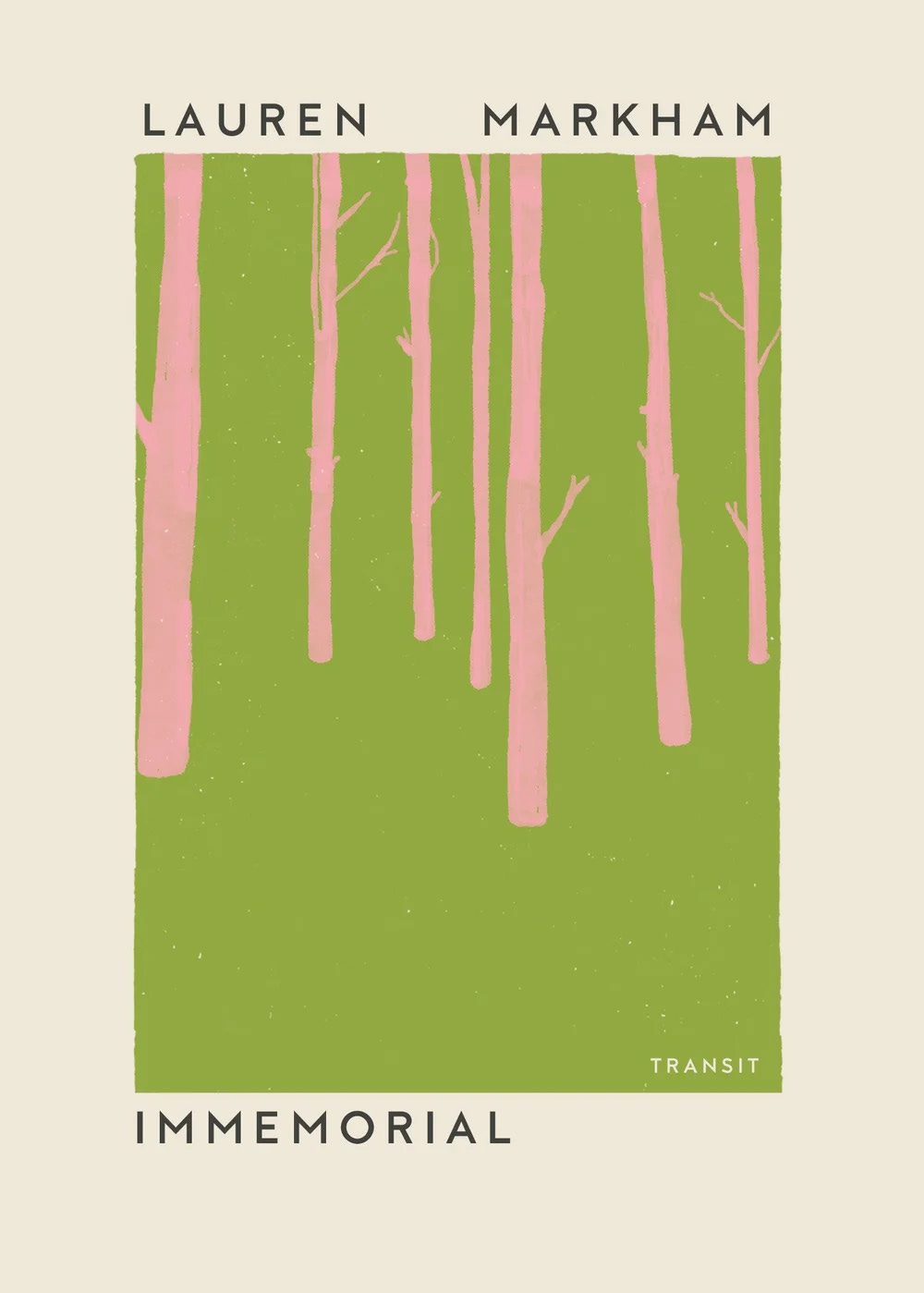
As Markham searches for a neologism to articulate what she’s feeling, the lecture wends through climate grief and the (apparently competitive!?) world of memorial design. I was reminded, while reading Immemorial, of Robin Hill’s Lyre’s Dictionary, an engine for generating endless neologisms from plausible roots.
Algorithms are no substitute for the rich unfolding of a personal obsession, but I resonated with the impulse to create—code, memorials, language—as a means to process slow-motion, ongoing tragedy. At the end of Assemblage, I assign my players a similar task, writing in the guidebook:
This assemblage is remembered by a name.
This could be a song, a phrase, a word, or an image that speaks to its entirety.
What is this assemblage named?
When you know the answer, write it down on one of the blank lines here, and so doing, commit all that occurred to history.
In the physical copy of the rulebook from which I pulled word-for-word the above text, the name “The Dream Time Loom” is written in blue pen on the first line. I didn’t play in that game, but I can imagine it.
I grieve.
An Assemblage Release Party
If you’re based in NYC or the tri-state area, I’ll be having a release party for Assemblage at the end of this month, and I would love for you to come!
January 31, 4:00 PM
Twenty Sided Store, 280 Grand St, Brooklyn, NY 11211
Tix free, but limited. Get them here!
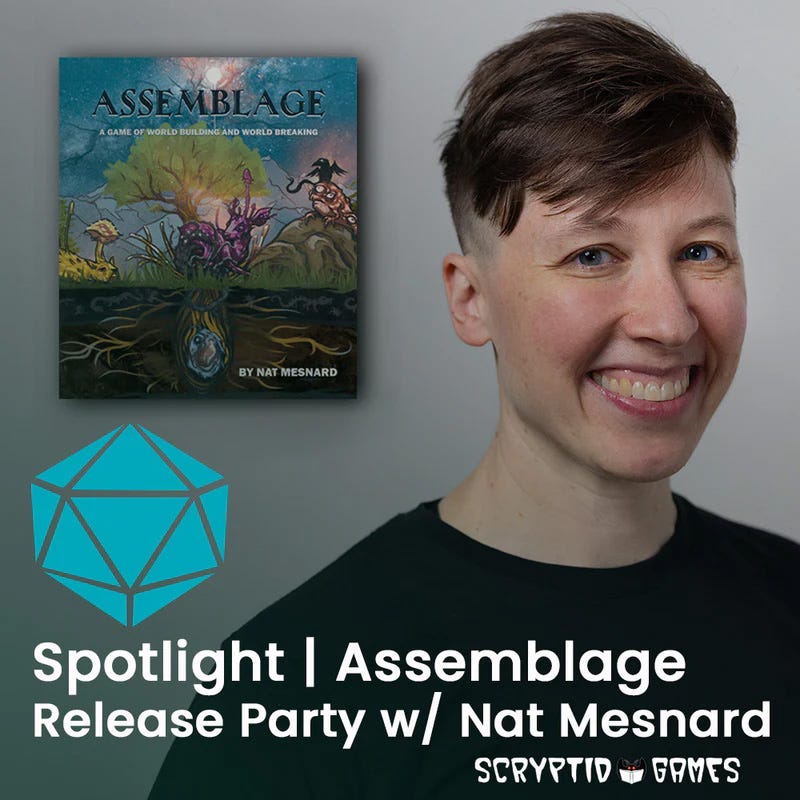
Lauren Bilanko, the co-owner of Twenty Sided, made this cute image of me for the party. I hope my dashing haircut and the cool game cover constitute sufficient motivation for you to attend: